
As sustainability becomes a standard requirement in the event and awards industry, packaging materials are under closer scrutiny than ever. Event organizers are no longer asking whether to choose eco-friendly packaging—but what it is actually made of.
At 365medals.com, we frequently receive questions about eco-bag materials used for medal packaging. Understanding these materials helps organizers make informed, responsible decisions that align with their sustainability goals without sacrificing quality or appearance.
This article breaks down the most common eco-bag materials, how they are produced, and why they are suitable for sustainable medal packaging.
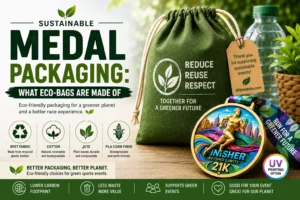
Why Packaging Materials Matter in Sustainable Events
Packaging often has a short life cycle, especially at large sporting events. Traditional plastic bags are typically used once and discarded immediately, contributing to landfill waste and environmental pollution.
Eco-bag packaging focuses on materials that are:
- Reusable
- Recyclable or biodegradable
- Durable enough for repeated use
- Less harmful to the environment
Choosing the right material is the foundation of truly sustainable medal packaging.
Common Materials Used in Eco-Bag Medal Packaging
1. Cotton Fabric Bags
Cotton is one of the most popular materials for eco-bag packaging.
Key characteristics:
- Natural and biodegradable
- Soft yet durable
- Suitable for screen or heat-transfer printing
- Reusable for everyday purposes
Cotton eco-bags are ideal for events that want a premium, natural look while maintaining strong sustainability credentials.
2. Recycled Cotton Blends
Recycled cotton bags are made from textile waste or post-industrial cotton scraps.
Benefits include:
- Reduced need for virgin raw materials
- Lower water and energy consumption
- Same appearance and functionality as traditional cotton
This option is especially attractive for organizers focused on circular economy principles.
3. Recycled Polyester (rPET)
Recycled polyester eco-bags are made from post-consumer plastic bottles.
Why organizers choose rPET:
- Diverts plastic waste from landfills and oceans
- Strong, tear-resistant, and long-lasting
- Lightweight and suitable for large-scale events
Although rPET originates from plastic, recycling it into durable bags significantly reduces its environmental impact compared to single-use packaging.
4. Non-Woven Polypropylene (PP)
Non-woven PP bags are widely used in event packaging due to their cost-effectiveness and durability.
Material features:
- Lightweight and water-resistant
- Reusable many times
- Lower environmental impact than single-use plastic bags
When reused repeatedly, non-woven PP bags offer a more sustainable solution than disposable plastic alternatives.
5. Jute and Natural Fiber Bags
Jute and other plant-based fibers are increasingly used for eco-bag packaging.
Advantages include:
- Fully biodegradable
- Distinct natural texture and appearance
- Strong sustainability perception
These bags are ideal for eco-themed events or premium award ceremonies where environmental messaging is a priority.
How Eco-Bag Materials Support Reusability
One of the biggest sustainability advantages of eco-bag packaging is reusability. Unlike plastic bags, eco-bags are designed to be kept and reused for shopping, travel, or storage.
A reusable bag:
- Extends the lifecycle of the material
- Reduces demand for disposable packaging
- Keeps your event branding visible long after the event
- The longer an eco-bag is reused, the greater its environmental benefit.
Safety and Protection for Medals
Eco-bag materials are not only sustainable—they are practical. Most eco-bags provide adequate protection for medals during transport and distribution, especially when combined with proper bulk packing methods.
At 365medals.com, we select eco-bag materials that:
- Prevent scratches and surface damage
- Support various medal sizes and weights
- Maintain shape during transportation
This ensures medals arrive in excellent condition without the need for plastic sleeves.
Choosing the Right Eco-Bag Material for Your Event
The best eco-bag material depends on:
- Event scale and budget
- Sustainability goals
- Desired appearance and branding
- Reuse expectations
For example:
- Large marathons may prefer recycled polyester or non-woven PP
- Premium or eco-themed events may choose cotton or jute
Our team at 365medals.com helps organizers evaluate these factors to select the most suitable option.
Conclusion: Materials Define Sustainable Packaging
Sustainable medal packaging starts with understanding what eco-bags are made of. From natural cotton to recycled fibers, each material offers unique benefits in terms of durability, environmental impact, and branding potential.
By choosing eco-bag packaging made from responsible materials, event organizers can significantly reduce waste while delivering a high-quality and meaningful award experience.
If you’re planning an event and want guidance on eco-bag materials for medal packaging, 365medals.com is here to help you make a sustainable choice.