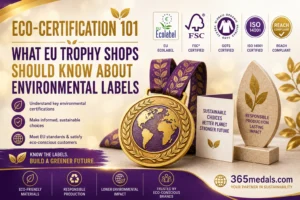
As sustainability becomes a core purchasing factor across Europe, eco-certifications are no longer optional for trophy shops—they’re a competitive advantage. From marathons and corporate awards to school competitions and government events, EU clients increasingly ask one question:
“Are your trophies and medals environmentally certified?”
This guide explains the most important environmental labels EU trophy shops should understand, including FSC, GRS, OEKO-TEX, and other key sustainability certifications—what they mean, why they matter, and how to use them to build trust and win more business.
Why Eco-Certifications Matter for EU Trophy Shops
The European Union leads globally in environmental regulation and consumer awareness. Sustainability certifications help trophy shops:
- Comply with EU Green Deal and ESG expectations
- Win contracts from public institutions and corporate buyers
- Build trust with eco-conscious race organizers
- Differentiate from low-cost, non-certified competitors
- Avoid greenwashing accusations
Eco-labels provide third-party verification—proof that your medals, trophies, ribbons, or packaging meet recognized environmental or ethical standards.
FSC Certification: Responsible Wood & Paper Sourcing
What Is FSC?
FSC (Forest Stewardship Council) certifies that wood and paper products come from responsibly managed forests.
Why FSC Matters for Trophy Shops
FSC certification is essential for:
- Wooden trophies and plaques
- MDF bases
- Certificate backings
- Packaging boxes and paper inserts
Key FSC Labels to Know
- FSC 100% – Made entirely from FSC-certified forests
- FSC Mix – Combination of FSC-certified, recycled, or controlled wood
- FSC Recycled – Made from 100% recycled wood or paper
EU Client Value
FSC is widely recognized across Europe and often required in public procurement tenders.
SEO Tip: Use phrases like “FSC-certified wooden trophies EU” and “sustainable wooden awards” on product pages.
GRS Certification: Recycled Materials You Can Prove
What Is GRS?
GRS (Global Recycled Standard) verifies:
- Recycled material content
- Supply chain traceability
- Environmental and social compliance
Common GRS-Certified Trophy Components
- Recycled zinc alloy medals
- Recycled aluminum trophies
- RPET ribbons and lanyards
- Recycled plastic medal cases
Why GRS Is Critical in Europe
EU clients want verifiable recycled content, not marketing claims. GRS provides:
- Exact recycled percentage documentation
- Audit-backed transparency
- Credibility for sustainability reporting
Example:
“This medal is made from 85% GRS-certified recycled zinc.”
OEKO-TEX®: Safe & Sustainable Textiles
What Is OEKO-TEX®?
OEKO-TEX® Standard 100 certifies that textiles are free from harmful substances, making them safe for skin contact.
Relevant for Trophy Shops
OEKO-TEX applies to:
- Medal ribbons
- Neck lanyards
- Fabric presentation pouches
- Embroidered badges or patches
Why EU Clients Care
- Required for youth, school, and sports events
- Aligns with EU chemical safety standards
- Especially important for children’s awards
Bonus: OEKO-TEX supports both health safety and sustainability messaging.
Other Important Sustainability Certifications to Know
🌍 ISO 14001 – Environmental Management Systems
- Applies to manufacturing facilities
- Shows commitment to reducing environmental impact
- Valuable for B2B buyers and corporate tenders
♻️ EU Ecolabel
- Official EU environmental certification
- Covers lifecycle impact (materials, production, waste)
- Still rare in trophy manufacturing—but highly respected
🔋 Carbon Neutral / Carbon Footprint Labels
- Indicates emissions measured and offset
- Increasingly requested for:
- International sports events
- NGO and climate-focused organizations
📦 Recycled & Plastic-Free Packaging Labels
- FSC-certified packaging
- Plastic-free or biodegradable packing claims
- Strong selling point for eco-themed events
How Trophy Shops Should Use Eco-Certifications (Without Greenwashing)
1. Be Specific
Avoid vague terms like “eco-friendly” alone.
Instead say:
- “FSC-certified wooden base”
- “GRS-certified recycled metal medal”
2. Show Proof
- Display certification logos (correctly)
- Offer certificates or audit references on request
3. Educate Your Clients
Many buyers don’t fully understand certifications. Simple explanations build trust and position you as an expert.
4. Match Certifications to Products
Not every product needs every label. Use relevant certifications only.
Common Mistakes EU Trophy Shops Should Avoid
❌ Claiming certifications without documentation
❌ Using supplier certifications that don’t apply to your product
❌ Mixing recycled and virgin materials without disclosure
❌ Using outdated or expired certificates
❌ Overusing eco-claims without clarity
Transparency always wins in the EU market.
Turning Certifications into Sales Opportunities
Eco-certifications aren’t just compliance tools—they’re powerful marketing assets.
Use them in:
- Product descriptions
- Tender responses
- Sales presentations
- Trade show displays
- Social media and blog content
Pro Tip: Create an “Eco Awards” category on your website highlighting certified products.
Final Thoughts: Eco-Certifications Are the Future of EU Awards
For EU trophy shops, understanding FSC, GRS, OEKO-TEX, and related certifications is no longer optional—it’s essential.
As sustainability expectations continue to rise, shops that invest early in certified materials and transparent communication will win more trust, more contracts, and more repeat clients.
Eco-certifications don’t just protect the planet—they protect your business future.